Friday, October 11, 2019

Curious Customs of a Faraway Country: Schoolin’

We’re talking that distant realm called “the past.” As in, “The past is a foreign country; they do things differently there.” (L. P. Hartley.) Also, “[F]or time is the longest distance between two places.” (Tennessee Williams.) Got it? All right, then.....


I recently celebrated a birthday. Not that I needed the occasion to think back on things; I just thought I’d bring it up. I’m closing in on the completion of my sixth decade on this Earth, as a citizen of the dominant, albeit moribund empire on the planet in the early 21st century.

This means I have memories from the late-middle to late 20th century. It’s the period from the late 1960s to the late 1980s that fascinates me most, because it’s when so much changed, “some forever, not for better,” as another former young man once sang. 
Looking west down Parklane Road in northeast Columbia, South Carolina, February 1977, a year before they turned it into a four-lane. I took this photo with an old Brownie camera and developed it old-school style in a darkroom for a photography class.


I’m not sure when this changed, sometime in the late 1970s or early 1980s when I was already out of school, but I remember when you could fail a grade. And by “fail a grade” I mean, “you didn’t go on to the next.” 

Go ahead and send your parents in to yell at the principal. If your marks were bad, too bad, you should have done better. You repeated the grade until you got it right. (I actually knew one kid who repeated 9th grade four times until he finally stood up in the middle of class one day, screamed, “I can’t take this anymore!” and ran out never to return. By then, he was old enough not to bother, anyway.) You were stuck with the little kids coming up, and they most certainly would not look up to you for your advanced age. Indeed, you’d look pretty stupid being the biggest kid in the class. 

It was enough of a mark of shame if you had to attend summer school, which was your only option if you wanted to attend next year’s classes with your peers. You weren’t just wasting your summer. You were a fool.

Shame was a thing back in the day, but that’s more than I can wrap my head around right now. Honestly, there was a lot of bad to go with the good it enforced, and I would make it clear that I do not write any of this out of nostalgia. My line for all those pining for the Good Ol’ Days: How truly golden was your Golden Age if all it came to was this? 


This is the part where one might post a photo of 10-year-old cross-dressers with their garishly attired adult groomers by way of driving home the point, but I’d rather look at these cows instead. The countryside west of where I live...ah, you’d hate it. Seriously, cows? Boring! “Eeew, how can you stand it? There’s nothing out here!”


Something that never comes up, even among putative conservatives is that, up until sometime between the Great Depression of the 1930s and the 1950s, high school was optional. That’s why it was called high school; it was higher education for those children of Good Families who aspired to go to college and take their place among the managerial classes. The rest were free to find jobs, or, better yet, apprenticeships to trades. It was what most people did, and by the age of 17 the smarter and more able ones were as good as full-grown men, fit to support a family.

But then someone got the bright idea all young people, regardless of interest or inclination, should be forced to sit at desks and regurgitate meaningless information for state-mandated tests until age 18. Children could not work to draw a paycheck until age 16. Oh, and now everyone is expected to go to college. You don’t want to be some dumb plumber, do ya? Naw, sir, you wanna work with your mind.

Oh, how I could go on. Suffice it to say, “I was the first in my family to go to college” is a quaint expression in A.D. 2019. I was the second generation in my family to go to college, and I’m proud that both of my adult children have ignored that mandate of mid- to late-20th century U.S. civic fashion—and, wouldn’t you know it, are making more money doing their respective things that their grandmother or I ever did. 


A broken, antique manure spreader enshrined in a stone-facade flower garden in the fading sun seems an apt metaphor for U.S. education, n’est-ce pas?


Like much of the mildewed and rotten furniture of our changing culture, the only way to fix our education system, K-12 and college alike, is to torch it. Burn it down, brush away the ashes, and build something that doesn’t waste everyone’s time, patience, and money. 

Educate people according to their gifts. If a child enjoys solving math puzzles but hates reading books and writing book reports, don’t make him read novels, and don’t make him write book reports. Train him how to write for his field and stop going out of your way to make such people miserable. Same deal with liberal arts types. Stop making people who will never use anything beyond common everyday arithmetic suffer through polynomial equations.

And what’s up with sitting at these desks for hours at a time listening to some jackass drone on and on until everyone glazes over in a stupor of ennui? And as for those children who can’t be fussed to learn nothin’, who just show up to cut-up....

We’ll stop here. We all know nothing so sensible will be permitted to happen. The smart people will homeschool. That’s all. Given what my own children went through, it’s what I’d do if I could do it all over again.


“All we need is an internet connection and we’re good to go.”


Monday, September 30, 2019

The Veil Between Worlds: Internet and Meatspace Edition

You’d think I would have learned something from that three day break in Internet service I endured in August, but...yeah, it’s an old story. Let’s see if I can tease a fresh lesson from this.


Of all the things that could go wrong, this was optimal. Whatever node in my router that connects to the Internet burned out. We still had printer and scanner functions across our home network, but no Facebook, e-mail, etc. None of that evil, evil social media we’re told is so evil by the news media posting links in our social media. 

I don’t understand the hate, myself. As we used to say Down South to complaining people complaining once again (or when someone simply wanted to be dismissive), “Sounds like a personal problem to me.” My Facebook page is the very occasional, very surface-personal update (“It’s a beautiful morning! The writing went well last night! It’s an anniversary! Happy Birthday to you!”) interspersed with recycled memes that are PG-13 at worst, and, with very few exceptions that are often later deleted, studiously avoid “current events” as defined by the mass media, among other controversies.

I will go out of my way to make things as cheery as possible, with just enough humor, some mildly dark, but mostly silly, to keep it funny. As I see it, there are plenty of other places to go if you’re in need of feeling angry and sad. 

For the same reason, I dial back on the profanity. As much as I cuss in real life (it’s an extraordinarily difficult habit to break), it seems 90% of everyone who posts to the Weird World Web writes like a precocious 11-year-old girl who just saw her first Quentin Tarrantino movie and naturally mistakes the nonstop verbal coarseness for toughness and sophistication. This cohort includes content creators for major news media outlets, in which the “reporters” seem especially anxious to let their readers know they’re “down,” as in, “really cool, Daddy-O. Check me out, a fresh-faced, soft-handed child of the upper-middle class talking like an urban lumpenproletariat.”

Which is all to say, most people would probably hate my Facebook page, and I honestly count on the mainstream media never taking notice of what I do. I don’t write for most people, and if you look around at the more successful writers, musicians, and artists, the best ones never did. They created for themselves, and people either got it or didn’t. Sometimes it took time to catch on. The story of the artist Van Gogh, who was famously unappreciated in his lifetime, comes to mind.

Everything is a niche, and thank God. What I look to do is build an audience who as tired of all the ugliness as I am, but smart enough to know not to complain too loudly about it. No, what we’ll do is build our own little oases of like-minded folk and take it from there.

Don’t drink and Internet, kids.


Every now and then I wonder why I bother posting on Facebook. I’ve noticed a lot of people have fallen away over the years. (At least half a dozen were rude enough to die on me.) It’s just me and the silly memes and the occasional update. 

I just like too many of the people on my Friends list. There are a few whose Likes I actively court, because I like to think I made them smile. A reaction from them makes me feel like I’ve done something good. I’m weird like that.

Anyway, once I got back online it turns out that not only was I not missed, I didn’t miss anything.

It’s just as well. This is the point in which most authors crow about all the work they got done, but, again, I’m not most authors. I caught up on some reading on my tablet, though. I’ve been putting away entire rows of e-novels this summer.

The bottom line is I’ve had to rethink what the heck I’m doing on social media. I can’t see giving it up—it’s too handy for keeping up with the people I care about on there—but I’m wondering if I shouldn’t flex my opinions more. Take a few stands.

I feel a day is coming when I will have no choice but to take a stand on something. So I’ll just have to keep thinking about it, then. Maybe make a few minor moves. I’d like to do this on my own, on my own time, than be forced into  it.

My favorite vendor’s table from the Potato Festival on 7 September this year. 


It’s even worse with Twitter. As much as I enjoy reading the threads in the snobs-vs.-the-slobs Twitter wars—I’m proud to say I was following GamerGate since the Zoe Post got people asking questions—the bulk of my own Twitter experience is spent retweeting other people’s Tweets promoting their latest video, blogpost, book, etc. On a really good day, I’ve got a blogpost of my own to promote. My traffic from Twitter is zero to negligible, but I feel like I should stay in the habit in case this changes.

I smile and shake my head to read about people losing their jobs for posts they made on Twitter when they were in high school. The kindergarten tattletale culture of the New Secular Inquisition looking for bad opinions and bad attitudes and bad words and “hate speech,” etc., over years of social media posts is a hateful thing, but, c’mon. You went to kindergarten. You remember that ugly, smirking fatso following other kids around looking to catch them in something so she could go tell the teacher and get them in trouble. Social media gave them a vector with which to expand their careers.

So don’t give them anything to catch you with. Go to the chan boards if you feel the need to express yourself in a manner most “edgy.” Be sure to get yourself a VPN first, if you’re crazy enough to post. 

I’m content to lurk, myself. It’s one of my favorite diversions. My audience, for the most part, though, are even more blessedly sheltered than I am. I still wouldn’t know how to explain what GamerGate was to them, or chan board culture, and who needs to know that badly, anyway?

Ironically, my core online audience is closer to the normies in meatspace going about their business than those whose entire life is spent in cyberspace, fighting the latest war of attitudes. I love irony in my diet, so it works for everyone.

And that’s all I’ve got until next time. Here’s a photo of a kitten sleeping next to my wife’s homemade witch broom on the table on our porch, which makes more sense than anything I’ve just written so far here.


Thursday, September 26, 2019

Psychic Bath Bombs in the Language Center

“Words mean things until they don’t” edition, composed in the spirit of George Carlin, the best language arts teacher anyone ever knew. WARNING: I’m wading into issues from the online culture wars on this one. Time to flex.


THE HEAT IS ON: Baked, fried, blazed, etc.: In the 1970s, high school students smoked marijuana to get “fried.” For the last 20 years or so—I wouldn’t know when this changed, only when I saw the first reference—the term for cannabis intoxication has been “baked.” It does seem healthier. Baked is always better than fried, right? Well, not if you’re on a keto diet...anyway, to “wake and bake,” to smoke immediately after rolling out of bed for the day, sings a cheerful rhyme. 

Furthering the cooking metaphor, to say one is flambéed would mesh nicely with the other word for intoxication, blazed.  For all we know some bourgie kids in a gentrifying neighborhood are already using that for their slang to distinguish them from the commoners.


Maybe we should call marijuana dispensaries “baking supply stores.”


CLOWNTOWN PRONOUNS: I’m a blissfully aged old man who has led a blissfully sheltered existence. Although I’ve seen more than most, it’s enough to know how fortunate I am for what fashionable madness I’ve managed to avoid. One hundred miles from the nearest interstate highway, in a small town surrounded by many square miles of farms and ranches, I see all I need to see of the world on this 26-inch monitor.

It’s only been in the last few years, not even the last ten, that I’ve read of this much mocked and derided (yet still bizarrely accommodated) phenomenon of “genderfluid” people who have special pronouns they insist you use for them. A young woman of my acquaintance whose work takes her to Denver described separate encounters with two such creatures, so I know they exist outside of Internet clickbait/ rage-reading. How widespread this actually is, however, remains to be seen. I know some newspapers like the Los Angeles Times make a point of “respecting  the pronouns” but no one respects the media much these days, if they read it at all, so there.

The pronouns in question for the pathological narcissist who wishes to make everything about them (that’s all this is, after all) are often “they/ them,” as if to acknowledge the legion of annoyances these people are capable of creating if you are foolish enough to engage with them. In other cases—but I suspect they’re extremely rare—you get oddities like “xir” or “zir.”

The funniest thing about all this is that to use anyone’s pronouns, one has to be talking to someone else about the pronoun’d person in question. Unless you’re writing for a blog, newspaper, etc., the only person who would know which pronouns you’re using is the person you’re talking to about the special needs nuisance with the pronouns. “Special needs nuisance with the pronouns” is a bit harsh, so I’ll use the more accurate, “that pathological narcissist.” 

That is, if I must talk about this person at all. Narcissists thrive on attention, even (and sometimes especially) negative attention. It’s best to not even let on that you’re annoyed.

The sensible course of action when approached by the kind of person who introduces him or herself as, “Hi, I’m ________, and these are my pronouns” is to say, “Pleased to meet you, ________. I’m sorry, I don’t mean to be rude, but I really have to take this call. See you around!” Then ghost out of there to take that imaginary phone call. And by “ghost,” I mean, “go home.” Back to your hotel room, or into your car driving far, far away.

What are you doing in a place where people like this are roaming loose, anyway? That’s on you, son. 


“When you’ve got vocabulary peculiar to your in-group, it’s fun for the in-group, but drives off the normies. One word or many words, it doesn’t matter. You end up looking like a bunch of propeller-hat nerds with decoder rings whispering over comic books in a backyard treehouse.” Or these people.

MEMBERSHIP BADGES AND DECODER RINGS FOR PUTATIVE GROWNUPS: Certain words have become useful markers for identifying someone’s political attitudes. The left has quite a few of them. To avoid a bunch of quotation marks littering the page, I’ll put what few I can think of in bullet-list form:
  • problematic
  • systemic
  • intersectional
  • cissexist (“cis”-anything, another neologism from this decade)
  • supremacy
  • dismantle
  • decolonize

I wonder if all these are going the way of “male chauvinism,” a phrase that was often used by the “women’s libbers” in the early 1970s. After much overuse “male chauvinism” became a ridiculous, meaningless phrase associated with ridiculous people who could do nothing but complain. Feminism had to re-brand to survive as a serious movement in the public eye. A big part of that was ditching that strange, clinical-sounding term that blamed men for everything. 

That, and the bra-burning. Yes, kids, I’m old enough to remember when feminism nearly died of its own silliness in the 1970s. We’re seeing the same thing happening today among the modern left with the above words. They’re killing themselves with their own vocabulary, and it’s not gone unnoticed that there are often disingenuous amendments of meaning among their lexicon. Consider the evolution of the word “racist,” for instance, and how it’s now impossible to be racist towards one group because of the amended meaning. These people will tell you it’s always been thus, too, when you know it hasn’t. I did not use the modifier “disingenuous” because I’m biased.

Meanwhile, it’s harder to peg people on the right side of the aisle. If they deliberately employ politically incorrect terms for groups of people and their ideologies, that’s one thing. There is one, and only one word, though, that let’s you know you’re among the hardcore: “degeneracy.” It’s an apt descriptor for what they see about them in popular and social culture—and although it is just one word, it would be good of them to dial it back. 

When you’ve got vocabulary peculiar to your in-group, it’s fun for the in-group, but drives off the normies. One word or many words, it doesn’t matter. You end up looking like a bunch of propeller-hat nerds with decoder rings whispering over comic books in a backyard treehouse. Or worse. “Oh, look, it’s the old people complaining about ‘degeneracy’ again.” “Oh, my goodness, what now? Did someone see a cartoon they didn’t like?”


A brilliant MS Paint-created meme, the text of which employs the most commonly used words and phrases by people of a certain political persuasion.

Wednesday, September 18, 2019

Do What You Can at Every Age

Nothing’s over until you say it’s over. Or your death from other causes.


I was startled to see how old songwriter and bandleader Ric Ocasek was when he died Sunday. Seventy-five is more than twice as many years as many entertainers live, and certainly more than most of us. 

What seemed even more out of place, though, was his age was more in line with the surviving Beatles and Rolling Stones, not someone who created and defined the New Wave sound of the late 1970s. Then the arithmetic hit me.

It was precisely 40 years ago at the time of this writing that The Cars’ first two albums were in everyone’s dorm room at the University of South Carolina, and played at least once all the way through at all the house parties I attended. If Ocasek was 75 when he died, that means he was 35 years old when he and his band were riding high on Candy-O. The recording for The Cars’ eponymously titled first album began in 1977, when Ocasek was 33. This means he and his band didn’t get their recording contract until he was 32 at youngest, if that.

This is yet another one of those deals in which you had to be there in that time frame to understand how significant this was. In the 1970s, by age 30, you were settled. You were married, in a good money-making career, or you were a loser. Your chance for a “late start,” Mr. Late Bloomer, was long past. This social convention persisted clear through the 1980s.

Moreover, if you were a musician, and you were 33 years old and still playing guitar and singing and bandleading without a recording contract, you’d better be leading one of your town’s best—and I mean best—cover bands available for school dances and weddings.

It no doubt helped that Ocasek and the rest of the band were the type of pale, unlined young men who looked far younger than they were, but it’s still no small thing that Ocasek could be even 28 years old and not running a cover band, but developing his own sound. 

For my money, Ric Ocasek and The Cars invented that brief shining moment in the late 1970s known as New Wave. To which I quickly add, no one else sounded like them (well, maybe Split Enz, bless them). Compounding the irony is that, for as pale and twee and Ocasek and company looked, they brought a necessary masculine energy back to music that was sorely missed in those days when disco dominated everything.

If you could only imagine what it was like hearing The Cars’ or Elvis Costello’s first albums in the pits of the Disco Era. In the middle of the desert, wishing for a death that never comes, and behold the dark-haired, nattily dressed skinny dudes — as opposed to the stringy-haired skinny dudes wearing nothing more than ratty jeans and the roll of socks they stuffed down ‘em — driving up in a beer truck, offering you a frosty cold bottle and a ride out.

Anyway, the point is, don’t think you’ve failed because you’re 20-something this or even 30-something that and you haven’t done whatever Big Thing you want to be remembered for yet. You have to keep pushing. Of course, there’s a meme for authors who didn’t publish until they were in their 50s and later, which is the club I’m in. Up and at ‘em, brothers and sisters. This might very well be the day. Or not. Doesn’t matter, so long as you’re here for it.


Sunday, September 15, 2019

Return of the Grownup

As they say, “Big, if true.” 


Coming of age in South Carolina, I noticed the different ways people pronounced “adult.” It was a tight spectrum. On one end were the people who pronounced it “AH-dult,” with an almost Bostonian nasality to the stressed short “a” sound. The effect was similar to hearing something hit the floor hard on one edge, then falling over with a soft thud. People who talked like this tended to be varying degrees of smug, pretentious and condescending, as opposed to those who sounded the word as “uh-DULT” or like the word “addled” with a hard “t” in place of the final “d.” 

This came to mind as I listened to a young man tell me about a writer and public speaker whose line “clean your room” is often mocked in the media. The words “adult” or “grownup” never came up, but this is precisely what it’s about. We’re going on two generations of children who haven’t had to do anything in the line of chores, or even basic self-maintenance. After all this time, they finally hear a reason for why they’re supposed to make up their beds, for why they must pick up after themselves, other than, “Because I said so/ I will have your father inflict physical violence upon you if you don’t.” 

Order begets order. “He that is faithful in that which is least is faithful also in much: and he that is unjust in the least is unjust also in much.” It’s a shame that adults of the past felt the need to assert their authority  over explaining to their children why we did all those chores in the first place. I see a lot of blame for the destruction of the “family unit,” but take it from someone who grew up on the bubble of working class/ extreme lower-middle class in 1970s South Carolina: most of the families I knew, and mine especially, weren’t models of anything we wanted to emulate. 

It never fails to appall this former believer when I reflect how many times I heard 1 Corinthians 13  read aloud—and it seemed not one damned believer understood what was said. However you translate that key word, there was very little done for charity or love. It was all done because someone else made you do it,  and told you to like it.

Many of us upon growing up didn’t have the heart to treat our children thus, myself included. Most of us on the bubble of the working-class, lower middle-class in South Carolina didn’t remember our parents and grandparents as happy people. It made no sense to want to live like them, doing things because I done tole you to, that’s why.

Mom and Dad may have lived together but it was clear they barely tolerated each other. Cultural influences surely didn’t help, but in many regards the family unit did a fine job of destroying itself.  

Main Street Monte Vista by stormlight. I love the apocalyptic vibe here, but don’t miss the rainbow over the Dairy Queen at left.


I follow several traditional art pages on Facebook, and while I share the admins’ disgust with the debased aesthetics of art and architecture post-World War I, I would add that there were good reasons the public was so willing to throw over beauty and skill for style and attitude. Namely, there were no reasons to keep it.

The great cathedrals weren’t built for peasants like them or myself. Those lovely, imposing edifices were no more than lovely, imposing reminders that we were ruled. Most of my fellow peasants understood this at a most basic level, even if they didn’t think in those precise terms. All these nice paintings and buildings and whatnot were for the consumption of the Good People. Those very same people working us long hours for low wages and even less respect.

I would clarify that it was not contempt with which traditional aesthetics were cast off. It was indifference. Most people reject the tangles of metal that pass for modern sculpture as ugly and pointless, but they seem strangely apropos in front of the glass-paneled skyscrapers where they’re generally found. Who is that guy on the horse in the park to them?

Yes, it’s a shame they’re taking all the representational art down, erasing history, and so on. But no one feels so connected to that history that they’re willing to fight for it. Why should they? I repeat: Who is that guy on the horse in the park to them? What do they owe him?


From left to right, the respective flags of fast food franchises, CGI-infused Hollywood extravaganzas, etc.; and yuppie mountaineers, deluxe snow skiing, legal marijuana. For most people, that is. Your mileage may vary.


A case could be made for the practicality of our contemporaries. Yes, we miss the good old days when painters could paint realistically and with an unabashed bias for beauty, when even the working class houses had a certain charm, certainly more than the haze-gray, slat-sided boxes with no windows on one side, but what are you going to do? Choosing the practical attitude over one informed by sentimental longing is a definitively adult position. “Reals before feels,” as some might put it.

I’ll call it right here, then: what we’re suffering from is a perverse form of “adulthood” as framed by lazy people. Most people are, in case you haven’t noticed.


This big, charmless block of concrete with slits for windows is a medical clinic. We know this because someone was kind enough to have MEDICAL CLINIC installed in big, raised steel letters on the side. As a practical matter from the perspective of a functioning elder adult, they have a fine staff (they diagnosed my cancer) and I’m grateful they’re there.


Back to my original point of curiosity, that some young men are expressing interest in motivational speakers who encourage them to bring order to their rooms, and by extension, their lives....well, let’s hope a lot more young men catch on to the message. Of particular note is these men boast of their accomplishments online, from new personal bests in physical training to books read, while “hiding their power levels” among the “normies.” On one hand, one is led to wonder how many of these posters on the chan boards are telling the truth versus plumping their curricula vitae. On the other, many may simply be exaggerating while still doing better than most, while the great majority lurks—and lift weights, reads, and meditates to set themselves apart from common herd-animal humanity.


They’re keeping their talk within their peer groups. No one need suspect anything...unless someone takes notice someone is healthier, fitter, and far more focused. Which could happen. These days, the most obvious rebels are the ones who aren’t fat and out of shape, who don’t have tattoos, piercings, or grotesque ear gauges, who dress neatly and carry themselves well. In short, as young men were expected to be 60 years ago.

We have indeed come to a point in which everything old is new again. Again, I don’t know how widespread this general trend is, or whether it will go beyond chan board/ underground status. It’s a piece of good news, though, so I’ll take it.


All photographs Copyright © 2019 Lawrence Roy Aiken. All rights reserved.

Friday, September 13, 2019

“Be Who You Are at Every Age”

Random thoughts as I approach my fifty-eighth birthday.


Every now and then I’ll make a remark on Facebook referencing my age, which is old. The last time I did it I got this in response:

Who said we’re old? For shame. ‘Old’ is only a state of mind, a perception, a figment of our imagination. We might all be turning corners, but we’re still learning far greater truths. That ain’t old.

I don’t see any shame in being old. The shame is in dying young. Also, my prostate cancer and failing eyes, my slowness to heal from simple bruises, etc., aren’t figments of anyone’s imagination. Those are the metaphorical corners I’ve turned, all of them amplifying that Greatest Truth of Them All, which is entropy. Ordered systems fall to disorder. People and things wear out, break down, fall apart, rust, decay, rot. If you’re lucky, you live long enough to experience some things along the way.


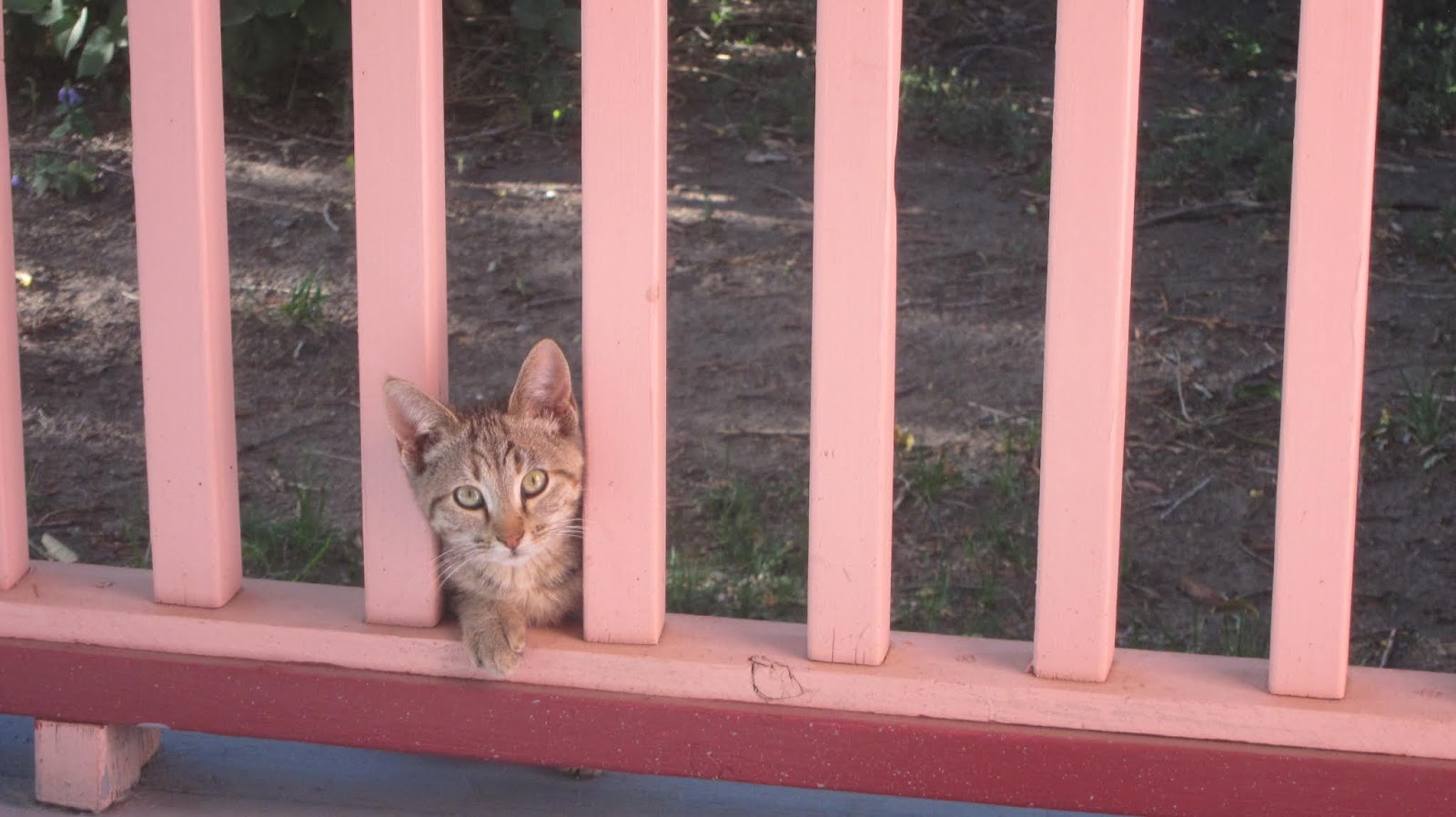
This kitten will shed her cuteness to grow into a full grown cat before meeting whatever ends befall feral cats. If she’s lucky. It’s sad to contemplate, but a photo of my old self right now would be simply horrifying.


We’re all raging against the dying of the light. Some of us rage longer than others. I’m not merely resigned, I’m happy to be out of the mating game, that I no longer have to impress comely young maidens with my wit and charm, that I no longer have to jockey for Most Interesting Man in the Room status with other men, that I’ve done the marriage thing and my children are grown, etc. All I’ve got to do is what I’ve wanted to do all along, and that’s read stuff and write stuff. 

I’m old. Fifty-eight is two steps away from 60, and 60 is elderly. It’s already 23 years out from 35, which is when most people in the U.S. count as the beginning of middle-aged. I haven’t been middle-aged in a while. I’m old. I remember hearing The Beatles on A.M. radio when they were a working band. I saw the last episodes of the original Star Trek when it was on broadcast television. That’s half a century ago. Very last century, at that.

Aside from finishing the books I want to write, my hope is to maintain good health so I can see what happens in 2025, when whomever comes after Donald Trump takes office as President of the United States. We’re in a fascinating period of demographic, political, and cultural transition and I’m curious to see what’s next. I’m entertained as it is by everyone’s overreactions to the Punch ‘n’ Judy show that passes for political theater these days. It’s only going to get better.

I’d also like to live long enough to see at least one grandchild. And, no, you hysterical ninnies, I don’t fear for the future of my children or grandchildren, regardless of “climate change” or whatever popular phony eschatology is being peddled at the moment. As has been pointed out by others, if you’re here today, it’s because you’ve got ancestors who survived all the great catastrophes of history, from the last Ice Age to the Bronze Age Collapse to the Fall of Rome, the Great Mortality (a.k.a. the Black Death), the Hundred Years War, etc., etc. 

My children are fairly savvy, far more than I ever was. Barring the usual unfortunate accidents, they’ll find a way around whatever history throws at them.


Meanwhile, I relish what days I have, the sunrises and sunsets and phases of the moon I still can see. If I don’t pack my days with ceaseless activity it’s because I know nothing matters whether I do it or don’t. As my favorite quote from John Lennon goes, “Time you enjoy wasting isn’t wasted.”

I would like to finish this last novel, though. So, then....

Thursday, September 12, 2019

Pulling the Curtains

The encircling mountains
harden into blue
then jagged black
as this high valley 
rolls away from the sun

as greens fade to gray
the feral cats on my porch
begin their slow walks
to wherever 
they will be
in the night

I undo the sashes holding
the curtains in their orderly halves
to draw them together
before the big picture windows

I’ve begun a habit of saying
Farewell and good night
to each day by its name and date
in honor of all the babies born
all things begun and ended

I want attention paid
even if it’s only mine

It brings nothing and no one back
soothes no one’s pain
even aggravates mine
to think of all the time 
I still waste each day
while so many others 
have been denied
my options

I name the day and bid it good night
then pull the curtains
I’ll keep doing this until I get it right
or a better idea.


From the forthcoming collection Nymphomagic Electroshock and Other Middle-Aged Complaints.
Copyright © 2019 by Lawrence Roy Aiken.